
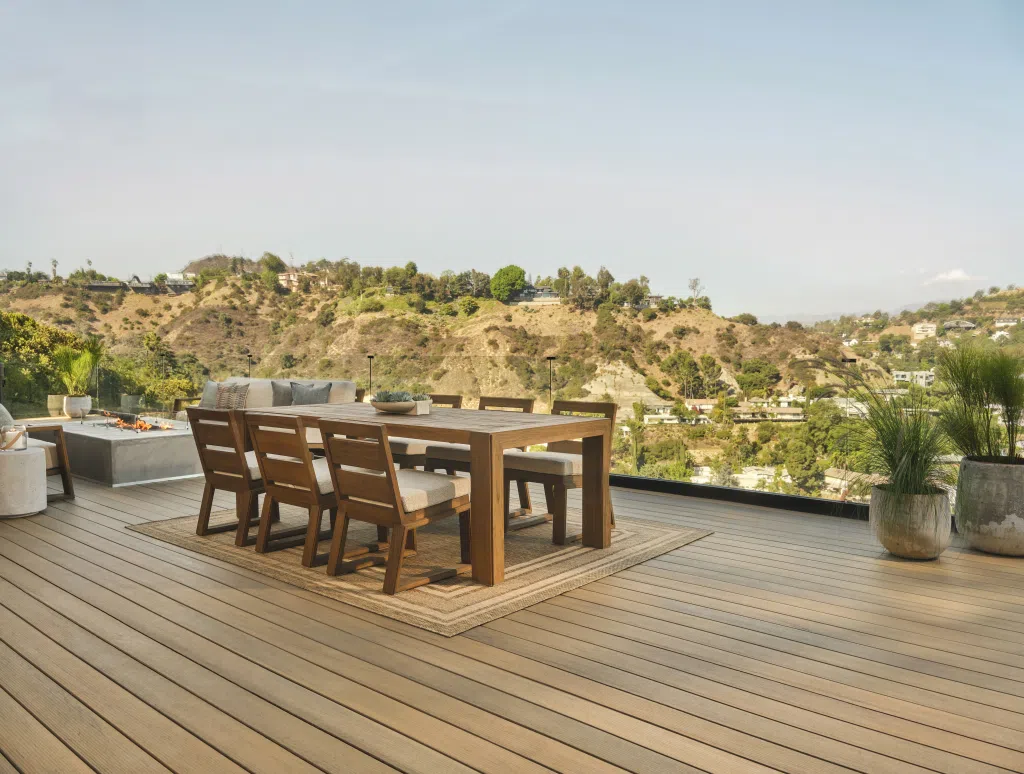
Walk into any deck material showroom and you’ll face the same question: Trex, TimberTech, Azek, Fiberon, or Deckorators? The brands all sound similar, the warranties look comparable, and the sample boards feel almost identical.
The differences matter more than the marketing suggests, particularly in Southern California where intense sun exposure and year-round use create performance requirements that don’t exist in climates with actual winters. The brand you choose affects how hot your deck gets underfoot, how well colors hold up against relentless UV, and whether you’re still happy with the appearance five years from now.
Price matters too, obviously. The gap between entry-level composite and premium options can add $5,000-$10,000 to a typical LA deck project. Understanding what you’re actually getting for that premium helps determine whether it’s worth the investment or just paying for brand positioning.
Get a Free Brochure
Get design ideas, information on materials, and more at your fingertips, and start planning your perfect project today. Transform your outdoor spaces with a luxury design & build company.
Get Your Free BrochureTrex: The Category Standard Everyone Knows
Trex built the composite decking category and still dominates brand awareness. When people say “I want a Trex deck,” they often mean “I want composite decking” the same way people say Kleenex when they mean tissue. This recognition creates both advantages and limitations.
The practical benefit of Trex’s market position is availability and installer familiarity. Every deck contractor in Los Angeles works with Trex regularly, which means competitive pricing and crews who understand the product’s quirks. You’re not paying a learning curve premium or dealing with installers figuring out details on your project.
Trex’s product lineup follows a clear good-better-best structure. Enhance represents their value tier at roughly $30-50 per square foot installed. Select sits in the middle around $35-55. Transcend occupies the premium position at $45-65. These ranges include materials and installation for typical projects.
Transcend delivers the most realistic wood appearance through dual-tone coloring and detailed grain patterns. The Lineage collection specifically addresses the trend toward warmer earth tones we discussed in spring design trends. Colors like Jasper and Sequoia feature the rich, natural variation that reads as authentic rather than plastic.
Performance-wise, Trex boards handle LA’s sun exposure well. The shell technology on Transcend boards provides genuine fade resistance, and the 25-year fade and stain warranty has teeth behind it. Scratch resistance is notably better than some competitors, which matters if you have furniture constantly moving around or dogs with claws.
Heat retention is Trex’s one consistent weak point. Dark Trex boards in direct afternoon sun get genuinely hot, sometimes uncomfortably so for bare feet. Lighter colors help considerably, but if you’re set on darker tones for a south or west-facing deck, you’ll want to consider this limitation seriously.
The environmental story matters to some buyers. Trex uses 95% recycled content, including reclaimed wood fiber and recycled plastic film. For environmentally conscious homeowners, this positions Trex as the sustainability leader among major brands.
TimberTech and Azek: Premium Performance at Premium Prices
TimberTech and Azek operate under the same corporate umbrella but target different markets. TimberTech covers wood-plastic composite lines similar to Trex. Azek represents their fully synthetic PVC offerings. Understanding this distinction prevents confusion when comparing options.
TimberTech’s composite lines (PRO, Edge, Landmark) compete directly with Trex’s tiers at similar price points. The boards perform comparably in most conditions. Where TimberTech differentiates is four-sided capping on premium lines, providing complete moisture protection rather than just top and bottom surfaces. For ground-level decks or areas with poor drainage, this matters.
Azek boards cost 15-25% more than comparable Trex Transcend installations, translating to roughly $3,000-6,000 additional cost on a standard 300-square-foot deck. What justifies this premium is primarily the PVC composition and 50-year warranty.
PVC boards stay cooler than wood-plastic composites in direct sun, a significant advantage in Los Angeles. The difference is noticeable, typically 20-30 degrees Fahrenheit on dark colors during peak afternoon exposure. For poolside decks or western-facing outdoor living areas, this heat performance alone can justify the cost premium.
Moisture resistance is absolute with PVC. The boards don’t absorb water at all, which prevents the expansion and contraction cycles that wood-plastic composites experience. In LA’s dry climate this matters less than humid regions, but it contributes to long-term dimensional stability.
The 50-year warranty provides genuine coverage that outlasts most homeownership periods. It’s fully transferable, which helps with resale value. While 25-year warranties are industry standard and adequate, the extended coverage reflects TimberTech’s confidence in PVC longevity.
Color selection on Azek’s Vintage and Harvest collections includes sophisticated options that avoid the gray-beige monotony of earlier composite generations. The multi-tonal appearance creates visual interest that holds up better over time than single-tone boards.
The weight difference matters during installation. PVC boards are lighter than wood-plastic composites, which speeds installation and reduces labor costs slightly. This minor benefit doesn’t offset the material premium but helps narrow the total cost gap.
Fiberon: Strong Middle Ground With Sustainability Focus
Fiberon occupies interesting territory between Trex’s market dominance and TimberTech’s premium positioning. Their product range includes both budget-friendly options and genuinely premium lines that compete with top-tier alternatives.
The Symmetry and Horizon collections represent Fiberon’s flagship products. These four-sided capped boards feature detailed grain patterns and multi-tonal coloring that rivals Trex Transcend’s appearance. Pricing typically falls slightly below Trex’s premium tier, creating a value proposition for buyers who want high-end aesthetics without absolute top pricing.
Fiberon emphasizes recycled content even more aggressively than Trex, with some lines using up to 94% recycled materials. The ColorGuard technology provides fade and stain resistance comparable to competitors’ premium offerings. Independent testing shows Fiberon boards maintain color well through years of UV exposure, which matters enormously in Southern California.
Heat retention performance sits between Trex and Azek. Fiberon boards don’t stay as cool as PVC but perform better than many wood-plastic composites in direct sun. Lighter colors from the collection work well for south and west-facing decks in Los Angeles where afternoon exposure is intense.
Availability can be hit or miss depending on your area. Fiberon isn’t as universally stocked as Trex, which sometimes means longer lead times or limited color selection. Working with contractors who regularly install Fiberon ensures access to the full product range.
The warranty structure matches industry standards with 25-year fade and stain coverage on premium lines. While not the extended 50-year coverage Azek offers, it’s adequate protection for realistic ownership periods.
Deckorators: Value and Innovation in Overlooked Packaging
Deckorators doesn’t carry the brand recognition of Trex or the premium positioning of Azek, but their products deserve more attention than they typically receive. The Voyage and Vault lines use mineral-based composite cores instead of traditional wood-plastic blends, creating genuinely different performance characteristics.
The mineral composite core eliminates organic material entirely, which prevents moisture absorption and mold growth more effectively than wood-fiber products. For ground-level decks or areas with standing water concerns, this provides real advantages. The boards feel denser and more rigid underfoot compared to traditional composites.
Pricing falls into the value category, typically 10-20% below Trex Transcend for comparable aesthetics. This creates opportunities for budget-conscious projects where you want quality appearance without premium pricing. The 25-year warranties on capped lines match what you’d expect from established brands.
Color selection skews toward natural wood tones rather than contemporary grays and warm earth tones. If you’re looking for traditional deck aesthetics, Deckorators delivers. If you want the latest design trends in warm browns and driftwood grays, options are more limited.
Availability through big-box retailers makes Deckorators accessible, though this same accessibility sometimes creates perception issues. Products sold through Lowe’s face unfair assumptions about quality compared to specialty distributor brands. The material performance doesn’t support this bias, but market perception affects resale value regardless of actual quality.
The Heritage line offers textured embossing with non-repeating patterns that create more visual variation than many competitors. For homeowners who want decks that don’t look obviously synthetic, this attention to natural variation makes a difference.
What Actually Matters for Los Angeles Projects
Brand comparisons tend to focus on specifications and warranty fine print, but practical decision-making comes down to a few key factors specific to Southern California conditions.
Heat performance matters more here than almost anywhere. If you’re building a deck with significant western or southern exposure, PVC’s cooler surface temperature justifies the premium for many homeowners. Alternatively, choosing lighter colors in any brand solves most heat issues at no additional cost.
UV fade resistance is non-negotiable. LA’s relentless sun exposure will reveal any weakness in protective capping or color technology. Stick with premium lines from any manufacturer rather than budget options that might save money initially but look tired in three years.
Installation quality affects performance more than brand choice in many cases. A perfectly installed Fiberon deck will outperform a poorly installed Azek deck every time. Working with experienced deck builders familiar with composite installation details matters more than brand specifications.
Color trends shift, but neutral tones age better. The warm earth tone movement happening now will eventually give way to something else. Choosing colors that read as timeless rather than trendy helps decks maintain appeal through ownership and into resale.
Price should be weighed against actual use. If you live on your deck year-round, premium materials justify costs through daily quality of life improvements. If the deck sees occasional weekend use, mid-tier options deliver adequate performance without premium investment.
The honest reality is that any of these brands will deliver 20-plus years of low-maintenance performance when properly installed. The differences matter at the margins. Trex offers the broadest availability and contractor familiarity. Azek provides the coolest surface and longest warranty. Fiberon balances performance and value. Deckorators innovates with alternative materials at competitive pricing.
For most Los Angeles homeowners, the decision comes down to budget constraints, color preferences, and heat tolerance. Walk into the choice with realistic expectations about what you’re actually getting for each price tier, and you’ll end up with a deck that serves well regardless of which brand name appears on the packaging.
If you’re ready to discuss composite decking options for your project, reach out to talk through which brands and lines make the most sense for your specific property and budget. You can see examples of our work with various composite materials at mgcdecks.com or follow current projects on Instagram.
FAQ
What is the best composite decking brand for Los Angeles?
For most LA homeowners, Trex Transcend offers the best balance of performance, price, and availability. If budget allows and you have significant sun exposure, Azek’s PVC boards stay noticeably cooler underfoot and justify the 15-25% premium. Fiberon Symmetry provides strong value for those wanting premium aesthetics at slightly lower pricing than Trex’s top tier.
How much does composite decking cost per square foot installed in Los Angeles?
Entry-level composite (Trex Enhance, Fiberon Good tier) runs $30-50 per square foot installed. Mid-tier options (Trex Select, TimberTech Edge) cost $35-55 per square foot. Premium lines (Trex Transcend, Fiberon Symmetry) range $45-65 per square foot. Azek PVC boards represent the high end at $50-75 per square foot installed. These ranges include materials, labor, and basic railings for typical projects.
Which composite decking brand has the longest warranty?
Azek offers a 50-year limited warranty on both product and fade/stain performance, the longest in the industry. Trex Transcend and TimberTech premium lines provide 25-year warranties. Fiberon and Deckorators capped composites also offer 25-year coverage. All these warranties are transferable to subsequent homeowners, which helps with resale value.
Do composite deck boards get too hot in Los Angeles sun?
Yes, dark composite boards in direct afternoon sun can reach uncomfortable temperatures for bare feet, sometimes 130-150°F. Azek PVC boards stay 20-30°F cooler than wood-plastic composites due to their non-organic composition. Choosing lighter colors in any brand dramatically reduces heat retention. For western or southern-facing decks in full sun, either select light colors or consider PVC materials if you want darker tones.
What’s the difference between Trex and TimberTech composite decking?
Trex uses wood-plastic composite (95% recycled content) across all product lines with varying levels of protective capping. TimberTech offers both wood-plastic composite lines (comparable to Trex) and fully synthetic PVC lines under the Azek brand. Trex generally costs less and offers better scratch resistance. TimberTech/Azek provides superior heat and moisture resistance with longer warranties at higher prices.
How long does composite decking last in Southern California?
Quality composite decking from major brands lasts 25-30 years minimum in Southern California’s climate, often longer with proper maintenance. The intense UV exposure is the primary aging factor rather than freeze-thaw cycles common in other regions. Premium capped composites with strong fade resistance maintain appearance better long-term. Budget uncapped composites may show fading and weathering within 5-10 years despite remaining structurally sound.
Is composite decking worth the cost compared to wood?
In Los Angeles, composite typically justifies the cost premium over wood. The eliminated maintenance (no annual staining/sealing), superior fade resistance under intense sun, and 25+ year lifespan create long-term value. A composite deck costs 40-70% more than pressure-treated wood initially but saves hundreds annually in maintenance time and materials. For decks in full sun exposure, composite’s UV resistance alone justifies the investment.
Which composite decking brand offers the best colors for 2026?
Trex Transcend Lineage collection leads current color trends with warm earth tones like Jasper and Sequoia. Azek’s Vintage and Harvest collections offer sophisticated multi-tonal options. Fiberon Horizon provides four premium colors with multiple grain patterns. The trend toward warmer browns and driftwood grays means avoiding cool grays and stark whites that dominated previous years. Lighter warm neutrals work best for LA’s climate while staying current with design trends.