
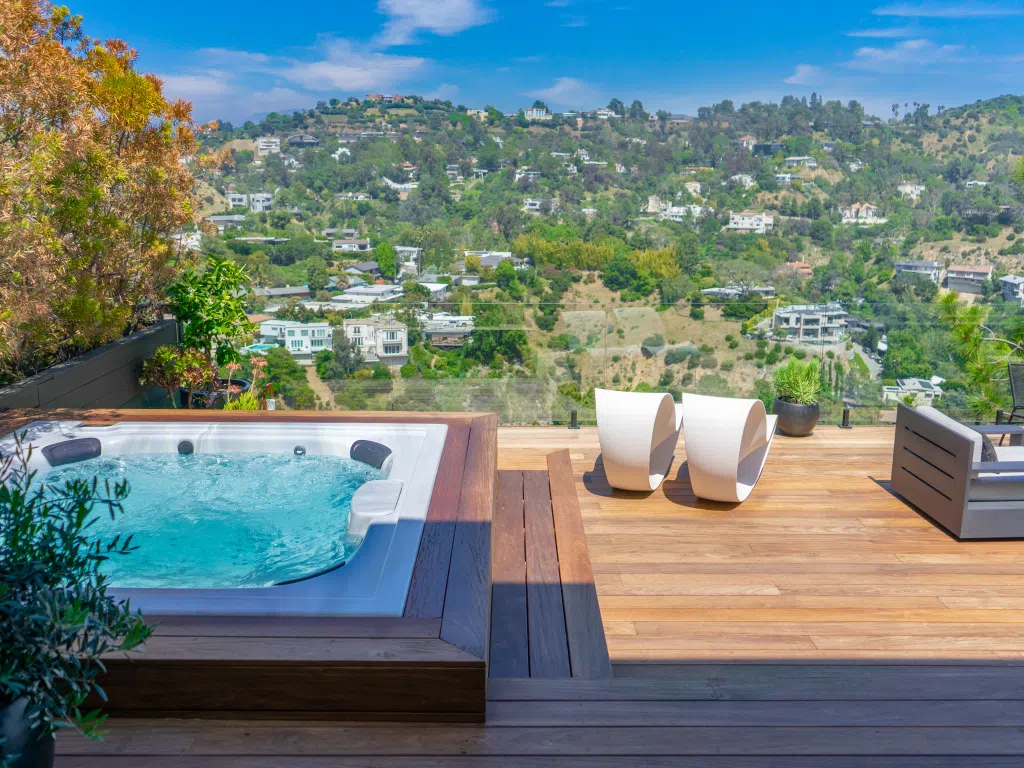
The question isn’t whether outdoor improvements add value. It’s which ones deliver returns worth the investment and which ones you build primarily for personal enjoyment.
Understanding this distinction matters because not every dollar spent on your backyard translates equally to resale value. Some projects return 70-80% of costs when you sell. Others might recoup 20-30%. The difference often has less to do with quality and more to do with market realities, buyer preferences, and how improvements fit your specific property.
Los Angeles presents unique considerations. Our year-round outdoor living means buyers actually value these spaces differently than markets where backyards sit unused six months annually. But that doesn’t mean every outdoor dollar is well spent from a pure investment standpoint.

Get a Free Brochure
Get design ideas, information on materials, and more at your fingertips, and start planning your perfect project today. Transform your outdoor spaces with a luxury design & build company.
Get Your Free BrochureDecks: Consistent Performers With Caveats
Decks typically return 60-80% of construction costs when properly executed, making them one of the more reliable outdoor investments. The appeal is straightforward: they add functional square footage, create defined outdoor rooms, and work for virtually any buyer regardless of lifestyle.
The quality of execution dramatically affects value perception. A well-built composite deck with proper railings, integrated lighting, and thoughtful design reads as a finished space that buyers can immediately use. A basic pressure-treated platform with minimal finishing feels like a project they’ll need to upgrade, which psychologically reduces what they’re willing to pay.
Material choices matter more for longevity than immediate value. Buyers don’t typically pay significantly more for Trex versus quality pressure-treated lumber on day one, but five years later the composite deck still looks new while the wood deck shows wear. This affects not just resale value but time on market. Properties with outdoor spaces requiring immediate attention sit longer.
Size considerations are crucial in LA’s compact lots. A deck that consumes 40% of available yard space might actually reduce value because buyers lose the flexibility to use that area differently. We’ve seen Venice properties where oversized decks were viewed negatively by buyers who wanted yard space for dogs or gardens. The sweet spot typically leaves at least 50-60% of yard area open.
Multi-level deck designs in hillside properties often return higher percentages because they solve problems rather than just add an amenity. A sloped yard with limited usable space becomes functional through terraced decking. Buyers recognize they’re getting solutions to site challenges, not just decorative improvements.
Built-in features like benches, planters, or storage increase perceived value without proportionally increasing cost. A $25,000 deck with $3,000 in integrated seating often appraises similarly to a $28,000 deck, but buyers respond more positively to the finished, thought-out feel.
Pools: The Complexity of Water Features
Pool ROI is perhaps the most misunderstood aspect of outdoor improvements. Pools typically add 5-8% to home value, which sounds modest until you consider that means a $50,000 pool might add $35,000-$60,000 to a $750,000 home’s selling price.
The challenge is the buyer pool itself. In Los Angeles, pools appeal strongly to families with children and people who entertain regularly. They’re neutral or negative for buyers concerned about maintenance, safety with young children, or who want yard space for other purposes. This creates pricing tension where the right buyer pays a premium while wrong buyers discount the property.
Location within LA matters enormously. In neighborhoods where 60-70% of comparable homes have pools, not having one can actually reduce your property’s competitive position. Buyers shopping in Sherman Oaks or Encino often expect pools. The same feature in dense urban areas like Silver Lake or Echo Park has a more mixed reception because yards are smaller and lifestyle expectations differ.
Pool quality and integration with the overall outdoor space affect value more than size. A modest plunge pool with beautiful decking, landscaping, and proper equipment housing often adds more value than a larger pool that feels like an afterthought plopped into an otherwise unfinished yard. The pool becomes part of a cohesive outdoor living environment rather than an isolated feature.
Maintenance visibility matters to buyers. Clean, well-functioning equipment housed attractively suggests the pool has been cared for. Visible aging equipment, dated tile, or obviously deferred maintenance raises concerns about what repairs they’re inheriting. Even if functionally sound, the perception affects negotiating position.
Timing considerations are real. Pool construction takes months from permit to completion, which means spring starts are essential for summer enjoyment. From an investment standpoint, having the pool finished and looking established with mature landscaping yields better returns than showing a construction site or brand-new installation that buyers discount for disruption.
Pergolas: Defined Spaces With Variable Returns
Pergolas typically return 50-80% of costs depending on quality, permanence, and integration with existing outdoor spaces. The wide range reflects how dramatically execution affects perceived value.
The distinction between a decorative structure and a functional outdoor room drives value perception. A basic pergola providing filtered shade over a patio is pleasant but not transformative. A substantial structure with integrated lighting, weather-resistant features, and thoughtful design that creates a genuine outdoor living room changes how buyers view the property’s usable space.
Permanent, well-engineered pergolas appraise higher than prefab or temporary structures. When a pergola is properly anchored, built to code, and integrated with the home’s electrical system for lighting or fans, appraisers can more readily assign value. Structures that look like they could blow away or were added without permits get discounted or ignored in valuations.
Scale matters tremendously relative to yard size. In a 1,200 square foot backyard, a 12×16 pergola creates definition. In a 400 square foot space, the same structure overwhelms and makes the area feel smaller. Proper scaling to property size affects whether the improvement enhances or detracts from perceived value.
Pergolas work best as components of larger outdoor living designs rather than standalone features. A pergola over a dining area adjacent to an outdoor kitchen creates cohesive outdoor rooms. The same pergola alone in an otherwise unfinished yard doesn’t carry the same impact. Buyers respond to complete visions more than isolated pieces.
Material quality affects both immediate appeal and long-term value retention. Composite or aluminum pergolas with powder-coated finishes maintain appearance without ongoing maintenance. Wood pergolas, while potentially beautiful initially, require regular treatment, and buyers factor that maintenance burden into their assessment. The difference can affect value by 10-15% on the structure itself.
Backyard Beautification: The Undervalued Investment
Professional landscaping, hardscaping, and overall yard improvement might deliver the highest ROI of any outdoor investment, yet it’s often the most overlooked. Mature plantings, quality hardscaping, proper drainage, and thoughtful design create the environment that makes all other outdoor features work.
Curb appeal research consistently shows that well-maintained landscaping can increase property value by 10-15%, which represents an exceptional return considering the relatively modest cost compared to structural improvements. The key word here is “well-maintained.” Professional initial installation followed by neglect doesn’t deliver value.
Hardscaping creates structure and usability that landscaping alone can’t provide. Patios, walkways, retaining walls, and defined planting beds transform yards from green space to outdoor living environments. In Los Angeles where water conservation matters, quality hardscaping reduces lawn area while adding function and visual interest.
Drought-tolerant landscaping has shifted from environmental consideration to market expectation in California. Buyers increasingly view traditional lawn-heavy yards as liabilities requiring conversion. Properties with established drought-tolerant gardens, proper irrigation systems, and low-water designs appeal to both environmental values and practical concerns about water costs.
The integration of all elements matters more than individual components. A beautiful deck next to a neglected yard doesn’t maximize value. The deck becomes part of a complete outdoor environment through complementary landscaping, appropriate lighting, and thoughtful transitions between spaces. This holistic approach often returns more value than spending the same money on one larger standalone feature.
Lighting deserves specific attention as a high-ROI element within beautification. Proper landscape lighting extends usability, enhances safety, and creates ambiance that dramatically improves how outdoor spaces photograph and show. For a relatively modest investment, quality lighting makes properties feel more finished and valuable.
What This Means for Your Investment
The highest-value outdoor improvements in Los Angeles share common characteristics: they solve problems specific to your property, appeal to broad buyer demographics, require minimal obvious maintenance, and integrate well with your home’s architecture and existing features.
Pure investment thinking might prioritize landscaping and deck work over pools and elaborate structures. Lifestyle value might justify exactly the opposite. Most homeowners should balance both considerations, recognizing some improvements are primarily for personal enjoyment with modest resale benefit.
Timing matters for capturing value. Outdoor improvements completed 2-3 years before selling allow landscaping to mature, new features to look established, and you to actually enjoy the investment. Completing work just weeks before listing means showing brand-new installations where buyers worry about quality and whether problems will surface, rather than established features with proven performance.
Quality execution affects ROI more than project type. A beautifully designed and built modest deck returns more value than a poorly executed expensive one. Professional work, proper permits, quality materials, and thoughtful design always outperform DIY shortcuts or budget compromises regardless of what you’re building.
The best outdoor investments are those you’ll genuinely use and enjoy while owning the property. The years of enhanced lifestyle have real value even if the financial return is modest. Conversely, building amenities you don’t use just hoping for resale return often disappoints because buyers sense when features are underutilized or poorly integrated into how the property actually functions.
If you’re considering outdoor improvements and want to understand how they might work for your specific property and goals, reach out to us at MG Construction & Decks to discuss your situation.