
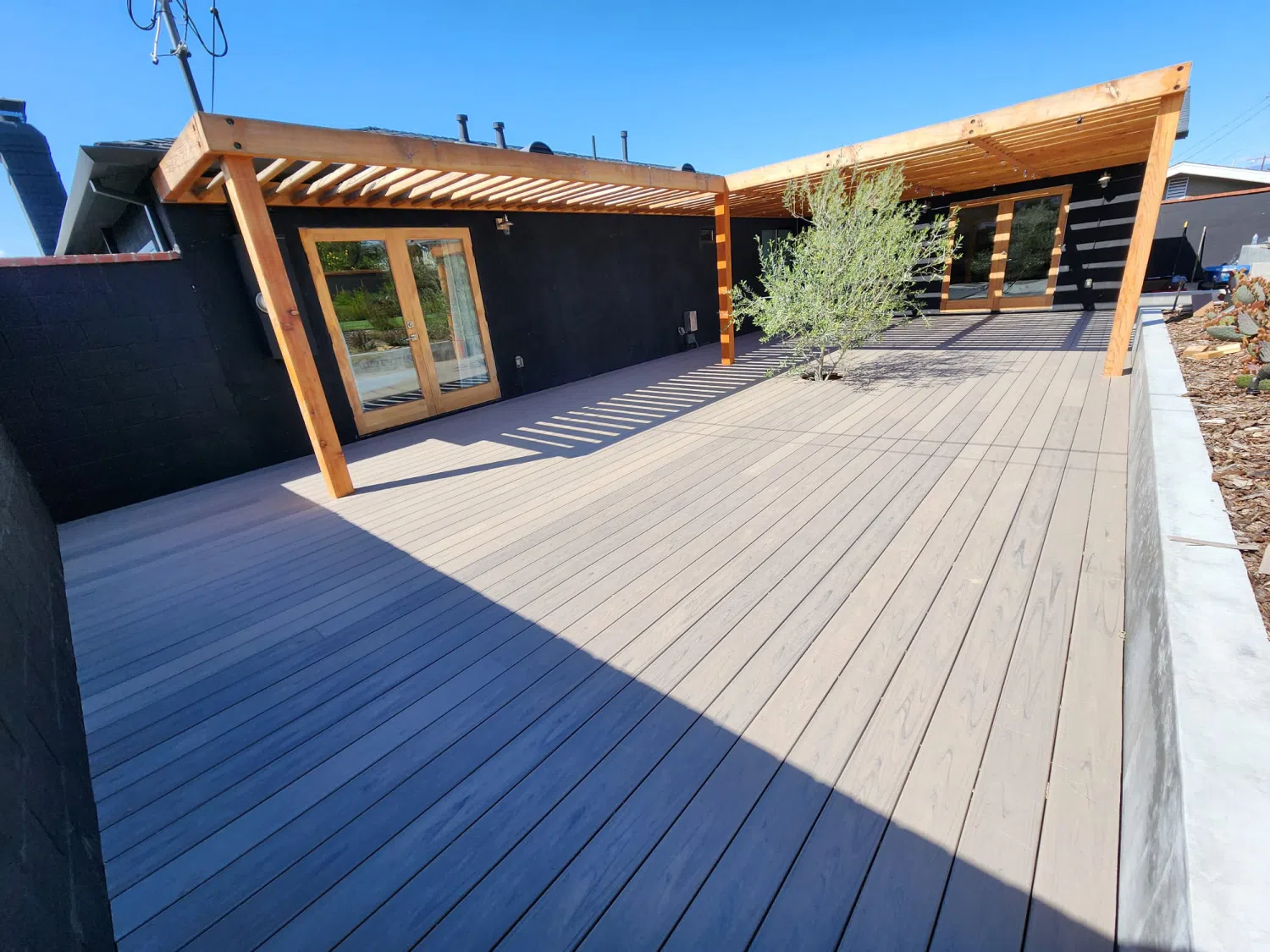
Southern California averages 284 sunny days annually. That’s wonderful for outdoor living and terrible for trying to use your backyard between 11 AM and 4 PM without shade.
The difference between a backyard you avoid during peak sun and one you actually use comes down to strategic shade solutions that work with LA’s climate rather than fighting it. The right approach depends on how you use your outdoor space, your property’s sun exposure patterns, and whether you want permanent coverage or flexible options that adapt to seasons and activities.
Not all shade solutions make sense in Southern California. What works beautifully in humid climates with frequent rain often fails here, where intense sun exposure, minimal rainfall, and year-round outdoor use create different requirements. The best options provide genuine relief from heat while maintaining airflow, complement your home’s architecture, and require minimal maintenance in our dry climate.
Get a Free Brochure
Get design ideas, information on materials, and more at your fingertips, and start planning your perfect project today. Transform your outdoor spaces with a luxury design & build company.
Get Your Free BrochurePergolas: Flexible Coverage With Character
Pergolas offer the most versatile shade approach for LA properties. The open lattice structure provides partial shade while maintaining the outdoor feel that makes Southern California living appealing. Unlike solid covers that can make spaces feel enclosed, pergolas filter sunlight without blocking it entirely.
The shade level from a pergola depends on beam spacing and orientation. Tighter beam spacing creates more shade, while wider gaps let more sun through. East-west beam orientation provides maximum midday shade when you need it most, while north-south beams create shifting shadow patterns throughout the day.
Customization options make pergolas adaptable to different needs. Retractable fabric panels add full coverage when desired but roll back for open sky during cooler months or evenings. These work particularly well over dining areas where you want flexibility based on time of day and activity. Motorized louver systems take this further, allowing precise control over shade and ventilation with remote or smartphone operation.
Climbing vines transform pergolas from architectural features into living shade structures. Bougainvillea, jasmine, and grape vines create natural canopies that provide cooling through both shade and transpiration. This approach takes time to establish but delivers beautiful, functional coverage that changes with seasons. The plants also help filter dust and improve air quality around your outdoor living areas.
Pergolas work best when sized appropriately for the space they’re covering. A 12×14 pergola over a dining area creates defined outdoor room character. The same structure in a small yard can overwhelm the space and actually make it feel smaller. Proper scaling to your property’s dimensions affects both function and visual appeal.
Placement matters as much as size. Pergolas attached to the house create natural transitions between indoor and outdoor spaces, extending your living area while providing weather protection near entries. Freestanding pergolas deeper in the yard define separate zones for lounging, dining, or poolside relaxation.
Solid Patio Covers: Complete Protection
Permanent roof structures provide maximum shade and weather protection. Built from wood or aluminum with solid roofing materials, these covers create genuinely usable outdoor rooms that function regardless of sun angle or intensity.
The advantage of solid covers is consistency. You’re not adjusting fabric panels or waiting for vines to grow. The space underneath stays shaded and significantly cooler than surrounding areas throughout the day. For outdoor kitchens, dining spaces, or lounge areas that see regular use, this reliability matters more than the flexibility pergolas offer.
Material choices affect longevity and maintenance. Aluminum structures resist LA’s intense sun without warping, fading, or requiring regular sealing. Wood covers deliver warmer aesthetics but need periodic treatment to prevent drying and cracking in our climate. Both can be designed to match your home’s architectural style, creating visual cohesion rather than appearing as afterthoughts.
Solid covers work particularly well in areas with western exposure. That late afternoon sun can make outdoor spaces unusable from 3-7 PM during summer months. A permanent roof blocks this completely while maintaining usable space during the hottest hours.
Ventilation becomes crucial with solid covers. Heat trapped under a roof without adequate airflow defeats the purpose of shade. Proper design includes sufficient clearance heights, strategic placement relative to prevailing breezes, and sometimes integrated fans to keep air moving. Without these considerations, covered areas can feel stuffy rather than comfortable.
Building codes and permits apply to permanent structures. In Los Angeles, solid patio covers typically require permits and must meet specific setback requirements from property lines. Working with contractors familiar with local regulations prevents delays and ensures the structure is built to code from the start.
Roof Extensions: Architectural Integration
Extending your home’s existing roofline over outdoor areas creates seamless integration between house and yard. This approach works best when architectural consistency matters and you want coverage that looks like original construction rather than an addition.
The primary advantage is visual continuity. Matching roofing materials, slope angles, and trim details to your existing home creates a polished appearance that pergolas or standalone covers can’t replicate. For traditional homes where architectural character matters, this cohesion affects overall property presentation.
Structural requirements are more involved than freestanding options. Roof extensions tie into existing house framing and roofing systems, requiring engineering to ensure proper load distribution and weather sealing. This complexity increases both cost and construction timeline compared to standalone structures.
The coverage area is typically limited to spaces immediately adjacent to the house. Unlike freestanding pergolas that can be positioned anywhere in the yard, extensions work best for patios and decks directly off the home. This makes them ideal for outdoor kitchens or dining areas near interior rooms but less suitable for poolside lounges or garden sitting areas.
Gutter and drainage considerations matter more with roof extensions. Water runoff needs to be properly channeled to avoid issues with the house foundation or creating drainage problems in your yard. This requires thoughtful design integration with existing systems.
Motorized Louvered Systems: Smart Shade Control
Modern pergola systems with motorized louvers offer unprecedented control over shade and ventilation. Adjustable slats rotate from fully open to completely closed, allowing you to dial in exactly the coverage you want at any given time.
The functional advantage is adaptability. Open the louvers for stargazing on cool evenings. Close them partially for filtered midday shade. Seal them completely when rain approaches or during intense afternoon sun. This flexibility means the same structure serves different purposes throughout the day and across seasons.
Smart home integration adds convenience and automation. Weather sensors can automatically close louvers when rain is detected, protecting furniture and keeping the space dry without your intervention. Smartphone controls let you adjust settings from inside the house, and scheduled automation can open louvers in the morning and close them during peak afternoon heat.
Installation costs are higher than traditional pergolas due to the motorized components and electrical requirements. However, the versatility often justifies the investment for spaces that see heavy use. One structure effectively replaces both open pergolas and solid covers by adapting to conditions.
Maintenance requirements are modest but present. Motors and moving parts need occasional servicing, and the electrical connections should be properly weatherproofed. Quality systems are designed for outdoor exposure and years of operation, but they’re more complex than static structures.
Strategic Landscaping for Natural Shade
Trees and large plantings create shade while providing additional benefits like improved air quality, wildlife habitat, and aesthetic value. Strategic placement of shade trees can dramatically reduce heat in outdoor living areas and even lower cooling costs for your home.
The challenge is timing. Trees take years to provide meaningful shade, making this a long-term solution rather than immediate fix. However, once established, they require less maintenance than built structures and adapt naturally to seasonal changes by providing dense summer shade and allowing winter sun through deciduous species.
Species selection matters enormously in Southern California. Drought-tolerant options like California sycamore, coast live oak, or Chinese elm provide excellent shade while thriving in our climate with minimal water once established. Avoid species that require constant irrigation or drop excessive debris on patios and pools.
Placement relative to structures and property lines requires careful planning. Trees planted too close to houses can damage foundations or roofs. Too close to property lines creates neighbor conflicts. Proper spacing allows trees to reach full canopy without creating problems years down the line.
Understory plantings beneath tree canopies create layered shade that’s more effective than trees alone. Large shrubs, bamboo screens, or tall ornamental grasses add privacy while filling in gaps in coverage. This approach works particularly well along western or southern property boundaries where afternoon sun penetrates horizontally.
Combining Solutions for Complete Coverage
The most functional outdoor spaces often use multiple shade strategies that work together. A solid patio cover over the primary dining area provides reliable coverage. A pergola with climbing vines defines a separate lounging zone with filtered shade. Strategic tree placement adds natural cooling throughout the yard.
This layered approach addresses different needs rather than trying to make one solution do everything. The dining area where you host weekend barbecues needs consistent shade and weather protection. The reading nook where you spend quiet mornings benefits from dappled shade and garden views. The pool area requires flexibility between full sun for swimming and shaded seating for breaks.
Design coherence matters when using multiple structures. Matching materials, colors, and architectural styles creates visual unity rather than looking like a collection of unrelated additions. A wood pergola should complement a wood patio cover. Aluminum structures should use consistent finishes.
Phasing implementation makes sense financially and practically. Start with the area you use most or the space that receives the harshest sun exposure. Add additional coverage as budget allows and as you better understand how you actually use different zones throughout the year.
What Works Best for Your Property
Choosing the right shade solution starts with understanding your property’s sun exposure patterns. Observe which areas receive intense sun during the hours you want to use them. A western exposure that’s perfect at breakfast becomes unusable by 4 PM without shade. Northern areas that seem problematic might actually stay comfortable most of the day.
Consider how you actually use outdoor spaces versus how you imagine using them. If you rarely entertain large groups, extensive covered dining areas might be overkill. If you live outside during summer weekends, investing in quality coverage for lounging areas makes sense.
Budget realities affect both initial choices and long-term satisfaction. Solid patio covers cost more upfront but require minimal maintenance. Pergolas with fabric panels cost less initially but the fabric needs eventual replacement. Trees are inexpensive to plant but take years to deliver value. Factor in both installation and ongoing costs.
The best shade solutions work with Southern California’s climate rather than treating it like a problem to overcome. We have remarkable weather that allows year-round outdoor living. Strategic shade makes that lifestyle comfortable during our sunniest months while maintaining the open, connected feel that makes LA outdoor spaces special.
If you’re ready to add shade to your outdoor living areas, reach out to discuss options that work for your specific property and how you want to use the space. You can see examples of our pergola, patio cover, and landscaping work at mgcdecks.com or follow current projects on Instagram.
<>FAQ
What is the best shade solution for a small Los Angeles backyard?
Pergolas work best for small LA backyards because they provide shade without making the space feel enclosed. A 10×12 pergola with retractable fabric panels or climbing vines offers flexible coverage while maintaining the open feel that prevents small yards from feeling cramped. Solid patio covers can work in compact spaces when sized appropriately, but they require careful planning to avoid overwhelming the area.
How much does it cost to add shade to a backyard in Los Angeles?
Basic pergolas typically start around $8,000-$15,000 depending on size and materials. Solid patio covers range from $12,000-$30,000 based on dimensions and whether you choose wood or aluminum construction. Motorized louvered pergola systems run $20,000-$40,000 due to the automated components and electrical work. Strategic tree planting costs $500-$2,000 per mature tree, offering the most economical long-term solution though results take years to develop.
Do I need a permit to build a pergola or patio cover in Los Angeles?
Solid patio covers almost always require permits in Los Angeles because they’re considered permanent structures. Pergolas may or may not need permits depending on size, whether they’re attached to the house, and specific local requirements in your area. Setback requirements from property lines also apply to most shade structures. Working with licensed contractors ensures proper permit acquisition and code compliance.
What shade solution provides the most cooling for outdoor spaces?
Solid patio covers provide the most consistent cooling by completely blocking direct sun throughout the day. However, motorized louvered systems offer the best balance of cooling and versatility, allowing you to maximize shade during peak heat while opening up for breezes and stargazing during cooler hours. Strategic tree placement can reduce ambient temperature in outdoor areas by 10-15 degrees once mature canopies develop.
How do I choose between a pergola and a patio cover?
Choose a pergola if you want flexible shade options, prefer an open-air feel, and don’t mind adjusting fabric panels or waiting for climbing plants to establish. Choose a solid patio cover if you need consistent weather protection, want a space that’s usable regardless of sun intensity, or are covering an outdoor kitchen where complete overhead protection matters. Consider your primary use: dining and entertaining favor solid covers, while lounging and relaxation areas work well with pergolas.
What are the best plants for natural shade in Southern California?
Drought-tolerant shade trees like California sycamore, coast live oak, Chinese elm, and Tipuana tipu thrive in LA’s climate while providing excellent coverage once established. For pergolas, bougainvillea, jasmine, and grape vines create beautiful living canopies. These species require minimal water after establishment and handle our intense sun exposure without constant maintenance.
Can I add shade to an existing deck or patio?
Yes, both pergolas and patio covers can be added to existing outdoor spaces. Pergolas work as either freestanding structures or attached to the house, making them adaptable to most situations. Patio covers typically require structural connection to your home and may need additional foundation work depending on the existing deck or patio construction. Motorized louvered systems can also be retrofitted over existing spaces with proper engineering.
How long does it take to install a pergola or patio cover?
Basic pergola installation typically takes 1-2 weeks from permit approval to completion. Solid patio covers require 2-4 weeks depending on size and whether custom elements are involved. Motorized louvered systems take 3-4 weeks due to electrical integration and system calibration. Permit processing adds 2-6 weeks to any timeline, so plan accordingly if you’re targeting specific seasonal use.