
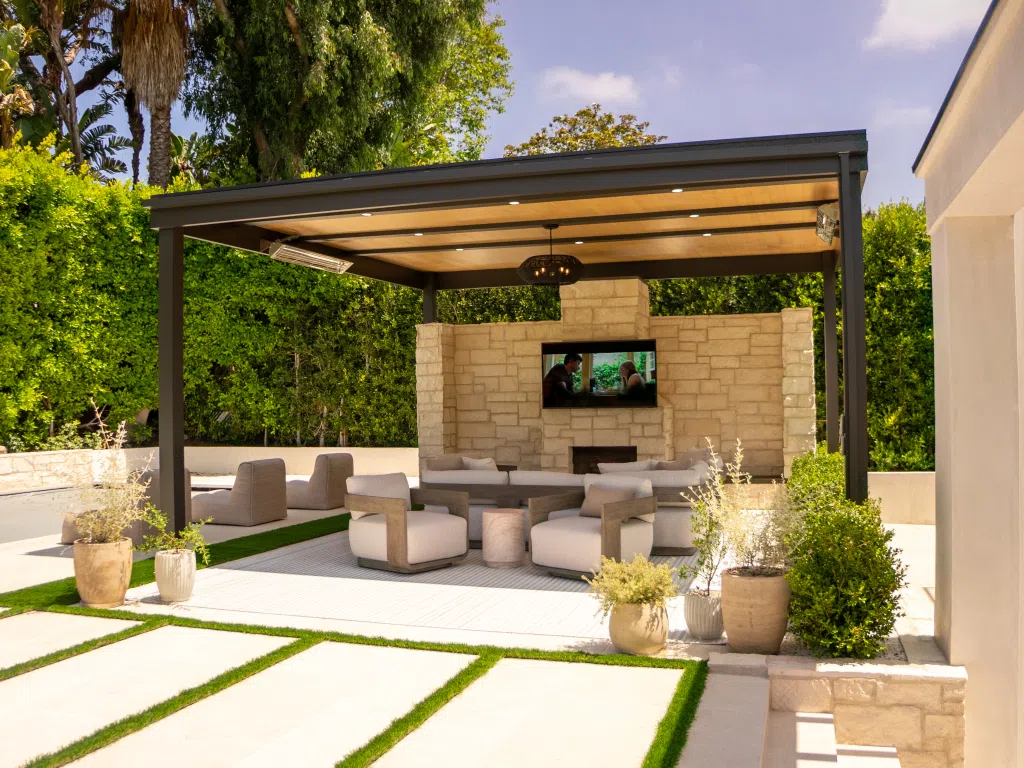
Quick Answer: Pergolas offer partial shade and architectural beauty for $4,000-$15,000, while patio covers provide complete weather protection for $3,000-$12,000. Choose pergolas for style and filtered light, patio covers for full shade and rain protection.
Standing in your Los Angeles backyard on a blazing July afternoon, you’re probably not debating architectural philosophy… you just want shade. But the choice between a pergola and a patio cover shapes how you’ll use your outdoor space for years to come, and in a city where we live outside ten months a year, it matters more than you might think.
The distinction seems simple enough: pergolas offer partial shade with their open-beam design, while patio covers provide complete protection overhead. Yet homeowners agonize over this decision because both options transform backyards in fundamentally different ways. One creates an outdoor room that feels like an extension of your home, the other crafts a garden feature that defines spaces without enclosing them.

Get a Free Brochure
Get design ideas, information on materials, and more at your fingertips, and start planning your perfect project today. Transform your outdoor spaces with a luxury design & build company.
Get Your Free BrochureUnderstanding the Basic Difference
A pergola is architecture’s suggestion of a ceiling: beams creating rhythm and shadow without blocking the sky entirely. Picture wine country restaurants where vines weave through wooden slats, or those stunning hotel pools where white-painted beams create geometric shadows on the water. Pergolas whisper rather than shout, defining space through implication.
Patio covers, meanwhile, mean business about protection. They’re roofed structures attached to your home or freestanding, offering genuine shelter from sun and rain. Think of them as outdoor ceilings that happen to lack walls. Your furniture stays dry, your outdoor kitchen works year-round, and nobody gets sunburned during Sunday brunch.
The visual impact differs dramatically. Pergolas maintain openness and flow, preserving sight lines and keeping spaces feeling expansive. They’re sculptural elements that happen to provide some shade. Patio covers create defined outdoor rooms with clear boundaries between covered and uncovered space. They’re functional first, aesthetic second, though modern designs increasingly blur this line.
Cost Comparison for Los Angeles Installation
Let’s talk real numbers for Los Angeles, where labor costs run higher than most places and every contractor is booked weeks out. Basic pergolas start around $4,000 for a 10×10 prefab kit installed, climbing to $15,000 for custom-built designs with premium materials. Most homeowners land around $8,000-$10,000 for a nice cedar pergola that doesn’t look like it came from a big-box store.
Patio covers run surprisingly similar in price, though the range varies more widely. A simple aluminum cover might cost $3,000 installed, while a custom wood structure matching your home’s architecture reaches $12,000-$15,000. The sweet spot sits around $6,000-$8,000 for a quality cover that complements rather than compromises your home’s appearance.
The hidden costs differ between the two. Pergolas often need additional shade solutions – retractable canopies ($1,500-$3,000), shade cloth ($500-$1,500), or climbing plants that take years to establish. Patio covers might require gutters ($500-$1,000), electrical for fans and lighting ($1,000-$2,000), or permits that pergolas sometimes avoid.
Long-term maintenance affects total cost as well. Wood pergolas need staining every 2-3 years in our intense sun, while aluminum patio covers basically last forever with occasional hosing off. But pergolas’ simpler structure means fewer things can go wrong: no leaking roofs, no clogged gutters, no storm damage from solid surfaces catching wind.
Climate Considerations in Southern California
Our Mediterranean climate seems designed for outdoor living, but it presents unique challenges that affect the pergola versus patio cover decision. We get intense UV exposure, occasional winter rains, Santa Ana winds, and marine layer moisture near the coast, each factor favoring different solutions.
Pergolas excel in our dry season, roughly April through November. Their filtered shade prevents harsh direct sun while maintaining airflow that solid covers block. This natural ventilation matters during heat waves when covered patios can become stifling. The open structure also lets that gorgeous Southern California light filter through, maintaining the bright, airy feeling we love.
But those 15 rainy days each winter expose pergolas’ weakness. Sure, you can add clear panels or retractable covers, but then you’re basically building a convertible patio cover at premium prices. If your primary goal involves year-round use regardless of weather, patio covers win decisively.
Wind resistance varies counterintuitively. Solid patio covers catch wind like sails, requiring robust engineering to withstand our notorious Santa Anas. Pergolas let wind pass through, reducing structural stress. However, add-on shade cloth or climbing plants can turn pergolas into wind catchers too. Location matters as well: hillside homes in fire-prone areas might prefer pergolas that won’t trap embers, while beach properties need materials that resist salt air.
Design and Aesthetic Impact
The pergola versus patio cover choice fundamentally alters your home’s architectural story. Pergolas add rhythm and shadow play that changes throughout the day. Morning light streams through at sharp angles, noon creates geometric patterns below, and evening sun paints golden stripes across your dinner table. This dynamic quality brings spaces alive in ways solid covers can’t match.
Patio covers offer different aesthetic advantages. They create true indoor-outdoor rooms with defined ceilings that support fans, heaters, TVs, and elaborate lighting schemes. The solid surface becomes a canvas for design, for example, tongue-and-groove wood, exposed beams, or modern aluminum systems that disappear into contemporary architecture. You’re essentially adding square footage to your home, just without walls.
Your home’s style should guide the decision. Mediterranean and Spanish Colonial homes practically demand pergolas with their romantic, Old World associations. Mid-century modern houses suit either option: clean-lined aluminum covers or minimalist post-and-beam pergolas both work. Traditional homes often benefit from covered patios that extend the roofline naturally.
Consider the view too. Pergolas preserve upward sightlines, maintaining connection to trees, sky, and hillside vistas. This matters in Los Angeles where views add serious property value. Patio covers block overhead views but can frame horizontal vistas beautifully, creating picture windows to your landscape.
Functionality for Different Uses
Your intended use should drive the pergola versus patio cover decision more than pure aesthetics. Outdoor kitchens almost always need solid covers protecting appliances and food prep from weather. Nobody wants rain in their burger or leaves in their salad. The covered space also supports proper ventilation hoods, keeping smoke from collecting.
Dining areas work with either option, depending on your entertaining style. Casual gatherings suit pergolas’ relaxed atmosphere – think long summer dinners where dappled light plays across the table. Formal entertaining might prefer patio covers’ controlled environment where nothing depends on weather cooperation. You can set a proper table without worrying about wind, rain, or excessive sun.
Pool areas traditionally pair with pergolas, maintaining the open, resort-like feeling while providing relief from sun. The structure defines lounging zones without blocking views or creating heavy shadows over the water. However, covered patios adjacent to pools create all-weather gathering spots where parents can watch kids swim while staying comfortable.
Home offices and workout spaces require serious weather protection, making solid covers nearly mandatory. You need consistent lighting, temperature control, and absolute rain protection for equipment and electronics. Pergolas might work for yoga or meditation spaces where connection to nature matters more than complete shelter.
Permitting and HOA Considerations
Los Angeles permitting requirements differ significantly between pergolas and patio covers, potentially affecting your timeline and budget. Freestanding pergolas may not require permits in some cases, particularly smaller structures, though requirements vary by city and specific design. This loophole saves time, money, and hassle for simpler projects.
Patio covers almost always require permits because they’re considered structural additions affecting your home’s footprint and potentially its lateral support. Plan check fees run $500-$1,500 depending on size and complexity. The review process takes 3-6 weeks typically, longer if corrections are needed. You’ll need engineered plans showing load calculations and connection details.
HOA restrictions might dictate your choice regardless of preference. Many associations have specific guidelines about covered versus uncovered structures, materials allowed, and maximum sizes. Some prohibit solid covers entirely, viewing them as unauthorized additions. Others require architectural review committee approval that can take months. Check CC&Rs before falling in love with either option.
Historic districts add another layer. Areas like Hancock Park or Windsor Square might restrict visible additions, especially solid covers that alter rooflines. Pergolas often pass muster more easily since they’re considered landscape features rather than structural additions.
Making Your Decision
Choose a pergola if you value aesthetics over pure functionality, want to maintain openness and views, live in mild climate zones away from the beach, or use the space primarily during dry months. They’re perfect for creating defined zones without commitment, supporting climbing plants for living shade, and enhancing rather than altering your home’s architecture.
Pick a patio cover if you need year-round weather protection, plan to install ceiling fans or extensive lighting, want to create a true outdoor room, or live in areas with intense sun or marine layer. They excel for outdoor kitchens requiring ventilation, entertainment areas with electronics, and spaces needing consistent shade all day.
The hybrid option (a pergola with retractable canopy) offers flexibility at a premium price. You get open-air feeling when desired and full protection when needed. These systems cost $8,000-$20,000 but provide the best of both worlds for those who can’t decide or need variable coverage.
Consider phased approaches too. Start with a pergola and add shade elements over time as you learn how you actually use the space. Or build a partial patio cover over critical areas like outdoor kitchens while using pergolas elsewhere for aesthetic balance.
Ready to transform your outdoor space? MG Construction & Decks designs and builds custom pergolas and patio covers throughout Los Angeles. We’ll help you choose the right solution for your lifestyle, handle permits, and create the perfect balance of beauty and functionality. Contact us to explore options that match your home’s architecture and your family’s needs.