
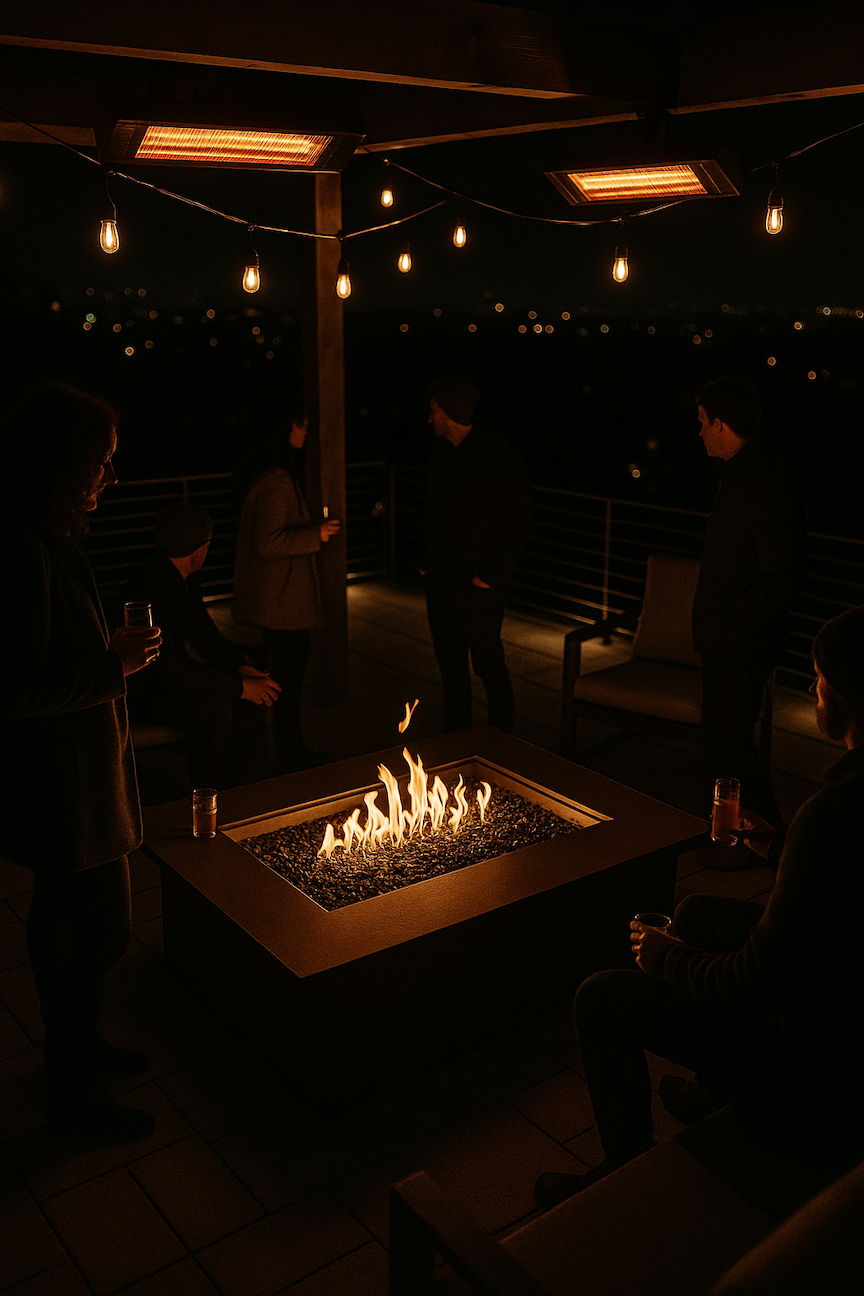
Patio entertaining during the holidays transforms outdoor spaces into warm, inviting extensions of your home where guests naturally gather, conversations flow easier, and your indoor space stays manageable even with a full house. Southern California’s mild winter weather makes outdoor holiday entertaining not just possible but often preferable to cramming everyone inside.
The difference between a patio that sits empty all winter and one that becomes the center of your holiday gatherings comes down to thoughtful preparation and the right elements working together. As established Los Angeles deck builders, we’ve watched hundreds of homeowners successfully host December parties on their patios, and the ones who get it right share similar approaches to lighting, heating, and layout.
Why Patios Work Better for Holiday Parties Than You Think
Your patio solves the biggest holiday entertaining problem: space. When you’re hosting 20-40 people, even a spacious living room starts feeling tight. Guests cluster in the kitchen, block doorways, and you’re constantly asking people to move so you can get to the oven.
A properly set up deck creates natural overflow space that doesn’t feel like an afterthought. In Los Angeles, our December evenings typically range from 50-60°F… cool enough to need a sweater, but far from uncomfortable with the right setup. We’ve built decks and patios for clients in Pacific Palisades and Manhattan Beach who specifically requested designs that accommodate their annual holiday parties, and these spaces consistently become the preferred gathering spot even when the indoor space is available.
The outdoor environment also changes the party dynamic. Conversations feel more relaxed, kids have room to move around without parents constantly worrying about broken decorations, and smokers or vapers have a natural spot that doesn’t require them to leave the party entirely. Plus, your indoor furniture, carpets, and walls stay cleaner when half your guests spend most of the evening outside.
Heating Solutions That Actually Work
The single biggest factor in successful winter patio entertaining is adequate heating. “Adequate” doesn’t mean one standalone patio heater for a 400-square-foot space. That’s the most common mistake we see. For holiday entertaining, you need layered heating that creates warm zones throughout your patio.
Overhead infrared heaters mounted to your patio cover or pergola provide the most effective ambient warmth. Unlike propane heaters that heat the air (which immediately rises and dissipates), infrared heaters warm people and surfaces directly. A well-designed setup with 3-4 infrared heaters can keep a 300-400 square foot patio comfortable down to 45°F outside temperature.
For example, our client in Studio City, who hosts a large Christmas Eve gathering every year, has a comprehensive heating system. They have four ceiling-mounted infrared heaters controlled by a dimmer switch, plus two natural gas fire features built into the deck railing. The combination means they can adjust warmth levels as the evening progresses and temperatures drop, and guests naturally circulate between the fire features and heated zones.
Fire features (whether fire pits, fire tables, or built-in fireplaces) add both warmth and ambiance that electric heaters can’t match. They create natural gathering spots and provide something for guests to interact with. Just make sure fire features are positioned where smoke won’t blow directly toward seating areas or your neighbor’s windows.
For quick, flexible heating, quality propane patio heaters still have a place. Position them in corners or edges of your patio where people tend to congregate but fixed heating doesn’t reach. The tall mushroom-style heaters work better than tabletop versions for groups of standing guests.
Lighting That Sets the Right Mood
Holiday patio entertaining requires more lighting than your typical summer evening setup. You need enough light for safety and functionality without killing the warm, festive atmosphere that makes outdoor gatherings special.
String lights remain the gold standard for patio ambiance, but don’t stop there. Layer your lighting with multiple sources at different heights. We typically recommend string lights overhead, accent lighting on architectural features or landscaping, and task lighting near food service areas or bars.
For holiday parties specifically, warm white or amber string lights (2700K-3000K color temperature) create a more inviting glow than cool white or multicolored options. We’ve seen too many patios where color-changing LED strips or harsh white lights make the space feel more like a commercial venue than a home gathering.
Pathway lighting becomes critical when guests are moving between indoor and outdoor spaces in the dark, especially after a few drinks. Solar path lights work fine for everyday use, but invest in hardwired low-voltage lighting for parties. The brightness and reliability make a real difference when you’re responsible for 30 people navigating steps and elevation changes.
Getting the wattage right matters more than most people think. For entertaining spaces, you want enough ambient lighting to keep things functional without creating a harsh, overlit environment. Lighting design experts recommend considering your room size, wall colors, and bulb type when calculating wattage. Darker surfaces absorb more light and require higher wattage to compensate. For a 300-square-foot patio with typical materials, plan for the LED equivalent of 450-600 watts of incandescent lighting distributed across multiple fixtures. That sounds like a lot, but it’s what creates the layered, functional lighting that makes outdoor entertaining work without feeling like a parking lot..
Consider uplighting for dramatic effect on architectural features, trees, or your home’s exterior walls visible from the patio. A few well-placed uplights add depth and make your patio feel more like an intentional entertainment space rather than just your backyard with some furniture.
Layout and Flow for Large Groups
The worst patio layouts for entertaining create dead ends where guests get trapped or force everyone into a single seating arrangement. The best layouts offer multiple zones with clear circulation paths between them.
Start by identifying your patio’s natural traffic flow from indoor spaces. That path needs to stay clear. Don’t block it with furniture arrangements that require guests to squeeze past seated people. We typically design decks with a minimum 4-foot-wide circulation path running from the house to the main patio areas.
Create distinct zones for different activities: a dining area with a table, a lounge area with comfortable seating around a fire feature, a standing/mingling area near a bar or serving station, and open space where people can move freely. These zones shouldn’t feel completely separated, but each should serve a specific purpose.
For a 300-400 square foot patio hosting 20-30 people, plan for roughly 60% of guests to be standing at any given time during a cocktail party. That means you need substantial open floor space, not wall-to-wall furniture.
Built-in seating along railings or planters works beautifully for parties because it provides places to rest without consuming floor space the way freestanding furniture does. A continuous bench along one or two sides of your patio can accommodate 6-8 people while leaving the center open for circulation.
Bar or serving areas need at least 4-5 feet of clearance in front to prevent bottlenecks. Nothing kills party flow like guests lining up three-deep to reach the drinks while everyone else tries to squeeze past. We often recommend an L-shaped bar layout that can be accessed from two sides, or multiple smaller drink stations instead of one central bar.
Weather Contingency Planning
Even in Southern California, December weather occasionally throws curveballs. A successful outdoor holiday party needs a backup plan that doesn’t mean canceling or moving everything inside at the last minute.
Retractable awnings or pergola covers provide weather insurance without permanently changing your patio’s open-air feel. Modern retractable systems can extend or retract in under a minute, and many include integrated lighting and heating. For clients serious about year-round patio use, we often design pergolas with retractable canopies from the start.
If permanent or retractable covers aren’t in your budget, have a plan for temporary weather protection. Pop-up canopies look terrible but work in an emergency. For a more refined option, consider having clear vinyl curtains made that can attach to your existing patio cover or pergola. They provide wind and rain protection while maintaining visibility and not making your patio feel like a tent.
Wind is often a bigger issue than rain for December entertaining in Los Angeles. Glass or acrylic wind screens along exposed sides of your patio make a dramatic difference in comfort without blocking views or making the space feel enclosed.
For actual rain, quick-drying outdoor rugs and furniture cushions minimize damage if weather moves in unexpectedly. Store a few extra towels within easy reach to wipe down surfaces, and make sure your patio has proper drainage so water doesn’t pool.
The Details That Elevate Your Setup
Small touches transform a basic patio setup into a memorable holiday entertaining space. These details don’t require major construction but significantly impact your guests’ experience.
Outdoor blankets or throws draped over seating give guests the option to bundle up without going inside. We’ve seen hosts provide baskets of fleece blankets near seating areas. Guests love them, and it solves the problem of some people running cold while others are comfortable.
Sound systems matter more than most people realize. A conversation that feels intimate inside often gets lost outdoors. Outdoor-rated speakers positioned strategically around your patio ensure background music actually provides ambiance without needing to crank the volume. For decks with built-in railings, we sometimes run speaker wire during construction so clients can add recessed speakers later without visible wiring.
Dedicated serving surfaces save trips inside and keep food at proper temperature longer. A serving buffet or bar cart positioned near your back door makes restocking easy while keeping the main patio areas clear. If your patio includes an outdoor kitchen, holiday parties justify the investment… no more running inside every time someone needs another drink or appetizer plate.
Covered outlets are essential for holiday entertaining but often overlooked. Weatherproof outlets positioned around your patio let you plug in slow cookers, warming trays, or beverage dispensers without extension cords snaking across the deck. We include multiple GFI-protected outlets in every outdoor kitchen design and recommend at least one outlet per 8 feet of deck railing for general patio areas.
Making Your Patio Party-Ready Year After Year
The patios that successfully host holiday parties share common design elements that make seasonal setup easy rather than a major production each December.
Storage makes the difference between patio entertaining that feels effortless and entertaining that requires two days of setup. Built-in deck boxes, storage benches, or a dedicated outdoor closet keep your heating equipment, extra cushions, string lights, and party supplies readily accessible. We include storage solutions in probably 80% of our deck and patio designs for exactly this reason.
Electrical capacity matters if you’re planning to run multiple heaters, lighting, and appliances. A dedicated 20-amp circuit for your patio prevents tripped breakers mid-party. We coordinate with electricians during deck construction to ensure adequate power for our clients’ entertaining plans.
Quality materials and construction mean your patio looks great year after year without intensive maintenance before each event. Composite decking, powder-coated aluminum railings, and stainless steel hardware maintain their appearance with minimal effort. You want to spend your pre-party time arranging furniture and preparing food, not pressure washing stained wood or tightening loose railing sections.
The most successful outdoor entertaining spaces feel intentional rather than improvised. When we design decks specifically for clients who entertain, we’re thinking about traffic flow, electrical placement, heating zones, and lighting from the start. These elements can be retrofitted to existing patios, but they work better when designed in from the beginning.
Frequently Asked Questions
How cold is too cold for patio entertaining? With proper heating, most guests stay comfortable on a Southern California patio down to about 45-50°F. Below that, you’ll notice people spending more time indoors regardless of your heating setup. Wind chill matters more than actual temperature. A still 50°F evening feels much warmer than 55°F with strong wind.
How much does it cost to make a patio winter-party-ready? Basic setup with quality string lights and a couple of propane heaters runs $300-500. A comprehensive system with permanent infrared heaters, integrated lighting, and weather protection ranges from $3,000-8,000 depending on patio size. Most of our clients who entertain regularly fall somewhere in the middle, investing $1,500-2,500 in permanent improvements plus rentable heaters for larger events.
Can I use my patio heaters under a covered patio? Electric and infrared heaters work fine under patio covers. Propane heaters need clearance specified by the manufacturer (typically 3 feet above and to sides) and should never be used under fully enclosed spaces. Natural gas or propane fire features built into railings or furniture require proper ventilation and should be professionally installed.
What’s the best flooring for outdoor entertaining? Composite decking and porcelain pavers both work beautifully for entertaining. They’re easy to clean, don’t get slippery when wet, and maintain their appearance with minimal maintenance. Avoid cheap outdoor carpets or artificial turf for entertaining areas, as they’re difficult to keep clean and show wear quickly in high-traffic areas.
How do I keep bugs away during outdoor holiday parties? Bugs are rarely an issue in December in Southern California, but if you’re concerned, ceiling fans create airflow that discourages flying insects, and citronella candles or torches positioned around the perimeter help. Skip bug zappers. The noise disrupts conversation and they’re not particularly effective anyway.
Should I worry about noise complaints from neighbors? Be considerate of your neighbors, especially if your patio parties run past 9 or 10 PM. Let adjacent neighbors know in advance if you’re hosting a larger event. Keep music at conversational levels. If your guests need to raise their voices to hear each other, your music is too loud. Most noise issues come from guests arriving and leaving, so encourage carpooling and remind people to keep voices down when walking to cars.
How many people can comfortably fit on my patio? A general rule for cocktail parties is 10-12 square feet per person when 60-70% of guests are standing. For a 300-square-foot patio, that’s about 25-30 people comfortably. Seated dining requires about 15-18 square feet per person including space for chairs to pull out. These numbers assume some guests will naturally spill into adjacent areas like nearby lawns or indoor spaces.