
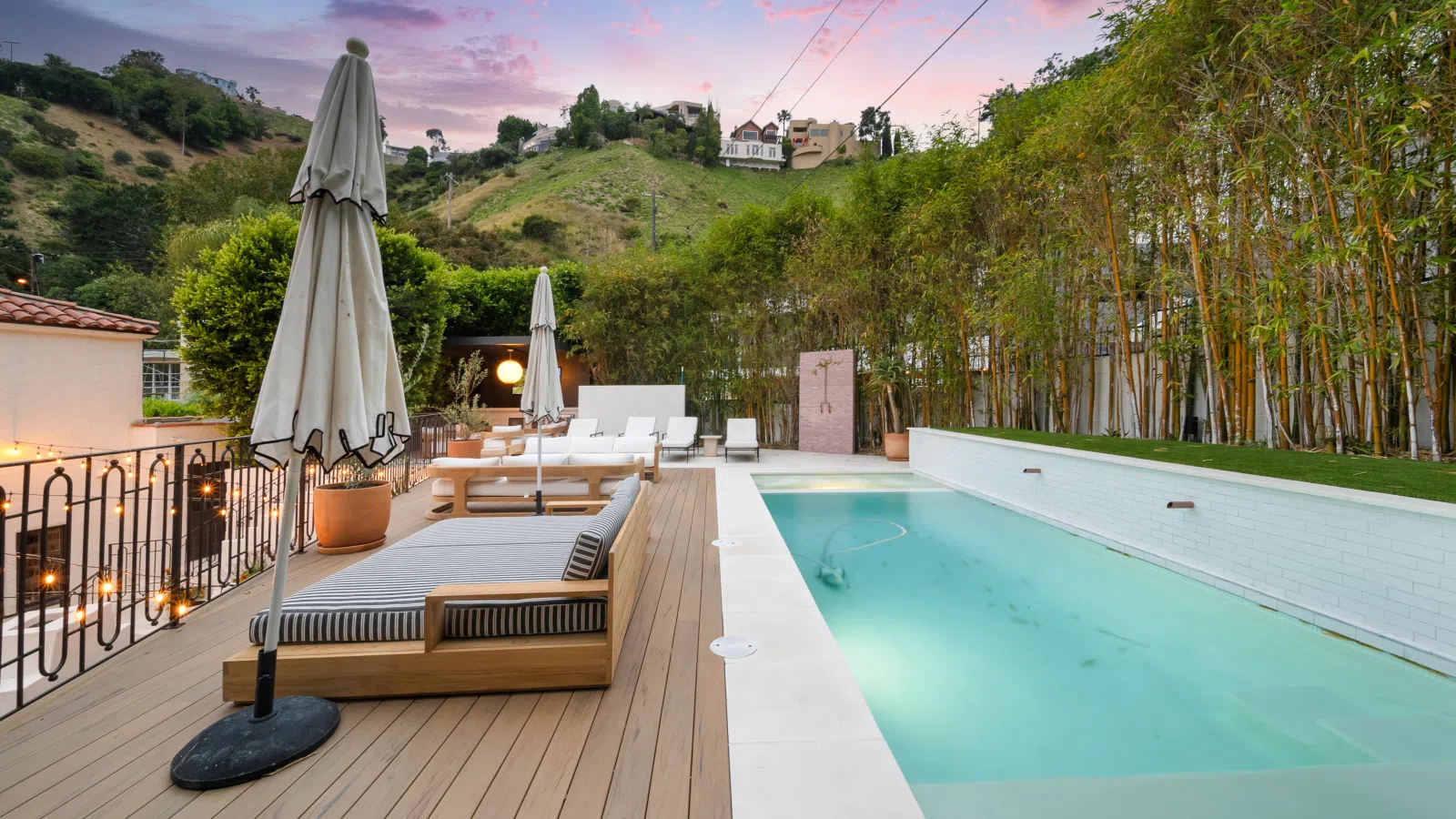
Quick Answer: Building a pool in Los Angeles costs $45,000-$85,000 for basic installations and takes 3-6 months from permit to completion. Start in January for summer swimming. Permits alone take 4-8 weeks and cost $3,000-$7,000. Hillside lots add $15,000-$40,000 and require additional engineering.
Planning a Los Angeles pool starts with understanding that January is actually the perfect time to begin your project if you want to swim by summer. Most homeowners don’t realize that pool construction in LA takes 3-6 months from permits to first splash, and starting now means avoiding the spring rush when every contractor gets booked solid.
The difference between a successful Los Angeles pool project and a nightmare isn’t just about choosing the right contractor or design. It’s about understanding the unique challenges of building in Southern California before you break ground. From navigating LA County’s permit requirements to dealing with hillside lots in the Hollywood Hills, or managing utility easements in Manhattan Beach, each neighborhood brings its own considerations that can add weeks to your timeline or thousands to your budget if you’re not prepared.
Understanding Los Angeles Pool Costs
Let’s address what everyone really wants to know first: a basic Los Angeles pool installation runs between $45,000 and $85,000, while luxury pools with all the features can exceed $200,000. These aren’t random numbers – they reflect the reality of building in Southern California where seismic requirements, strict permitting, and challenging terrain all impact your bottom line.
Your location within LA significantly affects pricing. Building a pool in Pacific Palisades or Bel Air comes with premium contractor rates and stricter architectural review requirements that can add 20-30% to base costs. Meanwhile, pools in the Valley or South Bay might cost less for labor but could require additional engineering for expansive soils or high water tables that weren’t apparent until excavation begins.
The type of pool matters too. A simple rectangular gunite pool with standard plaster finish and basic equipment package sits at the lower end of that range. Add a spa, infinity edge for that hillside view, or premium finishes like pebble tech, and you’re quickly pushing six figures. Custom shapes, especially on sloped lots, require additional engineering and more complex forming that drives costs up considerably.
Don’t forget the hidden costs that catch homeowners off guard. Electrical upgrades to support new pool equipment often run $3,000-$5,000. If your electrical panel can’t handle the additional load, that’s another $2,500-$4,000 for a panel upgrade. Gas lines for heaters, especially if you’re far from the meter, add another $2,000-$3,000. Then there’s landscaping restoration, deck modifications, and potential fence upgrades to meet current safety codes.
Timeline Reality Check
Three to six months sounds like a wide range, but each phase of pool construction in Los Angeles has variables that affect timing. Understanding these helps you plan realistically and avoid the frustration of unexpected delays.
Permit approval alone takes 4-8 weeks in most LA jurisdictions, though some cities like Beverly Hills or West Hollywood can stretch to 12 weeks if architectural review is required. The permit phase includes plan check reviews, corrections, and resubmittals that eat up time before you ever break ground. Smart homeowners start this process in winter when building departments are less swamped.
Excavation and steel installation happen quickly – usually within a week – but scheduling can be tricky. Most excavation crews book 3-4 weeks out during busy season, and rain delays in February or March can push everything back. The gunite shell goes in next, requiring proper curing time regardless of your eagerness to move forward. Rushing this phase to make up time guarantees problems down the road.
Plumbing and electrical rough-in follows, with city inspections at each stage. Missing an inspection because work wasn’t ready or failing due to code issues adds at least a week each time. This is where experienced contractors who know local inspectors and requirements save significant time. They get it right the first time instead of dealing with correction notices and reinspections.
The finishing phase – plaster, tile, coping, and deck work – typically takes 2-3 weeks but depends heavily on weather and material availability. Special order tiles or custom water features can add weeks if not ordered early. Equipment installation and startup happen last, followed by the final inspection that clears you to fill the pool. Even filling takes time – 24-48 hours depending on size and water pressure.
Navigating LA’s Permit Maze
Los Angeles pool permits aren’t just about the pool itself. You’re dealing with building permits, electrical permits, plumbing permits, and sometimes grading permits if you’re modifying slopes. Each has its own requirements, fees, and inspection process that must be coordinated properly.
The City of Los Angeles requires engineered plans for all in-ground pools, period. These plans must show structural calculations, steel reinforcement details, and plumbing schematics that meet current codes. Your contractor needs to submit these plans along with site plans showing setbacks, easements, and proximity to structures. The city wants to see equipment locations, drainage plans, and safety barrier details all spelled out clearly.
If you’re in an HPO (Historic Preservation Overlay) zone, add another layer of review. Areas like Hancock Park, Angelino Heights, or parts of West Adams require additional approvals to ensure pool construction doesn’t impact historic character. This usually means more detailed plans showing how the pool integrates with existing architecture and landscaping.
Hillside properties trigger the most complex permitting. The city requires geological reports, soils reports, and sometimes hydrology studies for pools on slopes greater than 10%. These reports alone can cost $3,000-$8,000 and take weeks to complete. The actual permit review for hillside pools often takes twice as long as flat lots because plans route through additional departments including grading and geological review.
HOA approvals add yet another layer if you’re in a planned community. Most HOAs require separate architectural review that can take 30-60 days. They’ll want to see everything from equipment screening to construction access routes. Some HOAs in places like Manhattan Beach or Palos Verdes Estates have design standards that exceed city requirements, potentially limiting your options or adding costs for specific materials or finishes.
Site Challenges Unique to Los Angeles
Every Los Angeles pool site has its quirks, but some challenges appear repeatedly across the region. Knowing what to expect in your specific area helps avoid surprises during construction.
Hillside lots dominate many desirable LA neighborhoods, and pools on slopes require serious engineering. It’s not just about carving out flat space – you need retaining walls, drainage systems, and sometimes caissons drilled deep into bedrock for stability. A pool in the Hollywood Hills might need 20-foot-deep caissons to anchor it properly, adding $15,000-$30,000 to base costs. The views are spectacular, but you pay for that perch.
Access issues plague older neighborhoods where houses sit close together. In areas like Venice, Silver Lake, or older parts of the Valley, there might not be enough side yard clearance to bring in equipment. This means using smaller machines, pumping concrete longer distances, or even using a crane to lift materials over the house. Each workaround adds time and cost to your project.
Utility conflicts hide underground until excavation begins. That old septic system from the 1950s that was supposedly abandoned? It’s right where your pool needs to go. The main sewer line that wasn’t quite where the plans showed? Now it needs expensive relocation. Gas lines, communication cables, and irrigation systems all create obstacles that require careful planning or costly relocation.
Soil conditions vary dramatically across Los Angeles. Beach communities deal with sandy soil and high water tables that require dewatering during construction. Areas like Sherman Oaks or Woodland Hills have expansive clay that swells and shrinks with moisture, requiring special engineering to prevent pool movement. Parts of Pasadena and La Cañada Flintridge sit on decomposed granite that’s great for drainage but requires different structural approaches.
Design Decisions That Impact Everything
Your design choices ripple through every aspect of the project, affecting not just aesthetics but also permits, timeline, and long-term maintenance. Making informed decisions early prevents costly changes mid-construction.
Size and depth determine more than just water volume. Larger pools obviously cost more, but they also trigger different requirements. Pools over 750 square feet might need additional safety equipment. Depths over 5 feet require different fencing standards. Competition-length lap pools need specific clearances that might not fit your lot without variances. That dream of a diving pool? Current codes require much larger pools than in the past – at least 38 feet long with specific depth transitions.
The eternal gunite versus fiberglass debate has clear answers in Los Angeles: gunite dominates for good reasons. Our seismic activity, varying soil conditions, and preference for custom designs all favor gunite’s flexibility and durability. Fiberglass pools work in some situations but limit your design options and can be problematic on slopes or in areas with ground movement. Vinyl liner pools are essentially non-existent here because they don’t handle our temperature swings and UV exposure well.
Special features multiply complexity exponentially. An attached spa adds $8,000-$15,000 but requires additional equipment and plumbing. Infinity edges on hillside properties create stunning visual effects but need catch basins, additional pumps, and auto-fill systems that add $15,000-$40,000. Water features, LED lighting systems, and automation all enhance the experience but require planning from the start – retrofitting later costs significantly more.
Equipment choices affect both upfront costs and long-term operation. Variable speed pumps cost more initially but pay for themselves through energy savings, and they’re now required by California law for new pools. Salt systems versus traditional chlorine impacts your plaster choice and maintenance routine. Heaters come in gas or heat pump varieties, each with different installation requirements and operating costs. Solar heating sounds appealing but requires adequate roof space with proper exposure.
Working with Your Contractor
The relationship between you and your LA pool contractor determines project success more than any other factor. Understanding how to work effectively with them, what to expect, and when to ask questions makes the entire process smoother.
Payment schedules in California are regulated by state law. Contractors can request a down payment of no more than 10% or $1,000, whichever is less. Subsequent payments should tie to completed project phases, not arbitrary dates. Be wary of contractors requesting large upfront payments or wanting payment for materials before they’re delivered. Legitimate contractors work with suppliers who offer them terms – they shouldn’t need your money to buy materials weeks in advance.
Communication patterns matter more than you’d think. Establish early how you’ll handle changes, questions, and updates. Will you communicate directly with the owner, or through a project manager? Who do you call with urgent concerns? How often will you receive progress updates? The best contractors provide weekly updates with photos, upcoming schedule details, and any issues that need discussion. They’re also clear about when you need to make decisions to avoid delays.
Change orders are inevitable – accept this now and budget accordingly. Maybe you decide mid-project to upgrade the tile, add a water feature, or extend the deck. Perhaps excavation reveals an old cesspool that needs removal. Changes cost more during construction than if planned originally, typically 20-30% more due to inefficiencies and rework. That’s why experienced contractors encourage you to finalize all decisions before breaking ground.
The inspection process involves both city inspectors and your contractor’s quality control. Don’t be alarmed by multiple inspection visits – it’s normal. Steel inspection before gunite, plumbing pressure tests, electrical bonding checks, and pre-plaster inspection all happen at specific points. Failed inspections aren’t necessarily red flags if they’re corrected quickly. Good contractors build inspection schedules into their timeline and have backup plans for common issues.
Hidden Costs Nobody Mentions
Every pool budget needs a contingency because surprises are guaranteed. The question isn’t whether you’ll have unexpected costs, but how large they’ll be. Planning for these prevents the stress of scrambling for additional funds mid-project.
Temporary fencing during construction runs $500-$1,500 but is required by most cities and insurance companies. Construction crews need bathroom facilities – either a portable toilet rental at $150-$200 monthly or allowing limited home access. Debris removal and dump fees add up quickly, especially if you hit rock during excavation or need to remove old concrete.
Your homeowner’s insurance will increase once the pool is complete. Call your agent early to understand the impact – it’s typically $500-$1,200 annually for liability and property coverage increases. Some companies require additional umbrella policies for pools. You might also need to upgrade or add safety features like alarms, covers, or specific fencing to maintain coverage.
Landscaping damage extends beyond the immediate pool area. Heavy equipment crushes irrigation lines, compacts soil, and destroys planted areas along access routes. Budget $5,000-$15,000 for landscape restoration unless you’re doing a complete backyard renovation simultaneously. Trees near the pool might need removal or root barriers to prevent future damage, adding several thousand more.
Utility upgrades surprise many homeowners. Older homes often need electrical service upgrades to handle pool equipment loads. If you’re adding landscape lighting, outdoor kitchens, or multiple water features, you might jump from 100-amp to 200-amp service. Gas meter upgrades might be necessary for heaters, especially if you’re also adding fire features or outdoor kitchens.
Maintenance Reality After Construction
Your pool’s first year determines its long-term success. New plaster needs careful chemical balance during startup and curing. Ignore this critical period, and you’ll deal with staining, scaling, or premature wear that warranties won’t cover.
Chemical costs run $100-$200 monthly if you maintain the pool yourself, more during heavy use periods. Professional service ranges from $125-$250 monthly for basic chemical maintenance to $400+ for full service including cleaning, filter maintenance, and minor repairs. Factor in annual costs for filter cleanings, salt cell replacements if applicable, and occasional acid washes.
Equipment lifecycle planning starts now. Pumps last 7-10 years, filters 5-10 years depending on type, and heaters 5-10 years with proper maintenance. Salt cells need replacement every 3-5 years at $500-$800. Automation systems and LED lights have control boards that fail after 5-7 years. Building replacement costs into your long-term budget prevents surprise expenses.
Energy costs vary wildly based on equipment choices and use patterns. A variable speed pump saves $500-$1,000 annually versus single speed. Heating a pool year-round costs $300-$500 monthly with gas, less with a heat pump but with higher upfront costs. Pool covers reduce heating costs by 50-70% but require diligent use to be effective.
Making the Final Decision
Building a Los Angeles pool is a significant investment that goes beyond simple cost-benefit analysis. It’s about lifestyle enhancement, property value, and creating the outdoor space you’ve envisioned. But timing, preparation, and realistic expectations determine whether it’s a dream fulfilled or a stressful ordeal.
If you’re planning to stay in your home for at least five years, a pool makes more sense than for shorter terms. You’ll enjoy it while owning and likely recoup 50-70% of the investment when selling, depending on your neighborhood and pool quality. In areas where pools are expected – like the Valley during summer or homes with views – not having one might actually hurt resale value.
Starting your project in winter means swimming by summer, but more importantly, it means better contractor availability, more attention to your project, and potentially better pricing. Contractors are hungrier for work in January than in April when everyone wants to build. You’ll get their A-team instead of whoever’s available.
The path from dream to reality requires patience, flexibility, and a good sense of humor. Delays will happen. Costs will creep up. Decisions you agonized over will seem obvious in hindsight. But when you’re floating in your completed pool on a warm July evening, watching the sunset over the Pacific, those stressful moments fade away.
Frequently Asked Questions
How much does a pool cost in Los Angeles? A basic pool in Los Angeles costs $45,000-$85,000, while luxury pools with features like infinity edges, spas, and premium finishes can exceed $200,000. Location, site conditions, and design choices significantly impact final costs.
How long does it take to build a pool in Los Angeles? Pool construction in Los Angeles takes 3-6 months from permit application to first swim. Permits alone take 4-8 weeks, construction takes 8-12 weeks, and finishing/inspection adds another 2-4 weeks.
Do I need a permit for a pool in Los Angeles? Yes, Los Angeles requires building permits, electrical permits, and plumbing permits for all in-ground pools. Hillside properties may also need geological reports and grading permits. Permit costs typically run $3,000-$7,000 total.
What’s the best time of year to build a pool in LA? January through March is ideal for starting pool construction in Los Angeles. You’ll avoid the spring rush, get better contractor availability, and have your pool ready for summer swimming season.
Can I build a pool on a hillside in Los Angeles? Yes, but hillside pools in Los Angeles require additional engineering, geological reports, and often caissons for stability. These requirements add $15,000-$40,000 to standard pool costs and extend the timeline by 4-6 weeks.
How deep can I make my pool in Los Angeles? Los Angeles allows pools of any depth, but pools over 5 feet deep require specific safety fencing. Diving pools must be at least 38 feet long with proper depth transitions per current building codes.
What’s the difference between gunite and fiberglass pools in LA? Gunite pools dominate Los Angeles because they handle seismic activity better, work on slopes, and allow custom designs. Fiberglass pools are limited in size and shape and can be problematic with ground movement common in LA.
How much does pool maintenance cost in Los Angeles? DIY pool maintenance costs $100-$200 monthly for chemicals. Professional service runs $125-$250 monthly for basic chemical maintenance or $400+ for full service including cleaning and repairs.
Will a pool increase my property value in Los Angeles? Los Angeles pools typically recoup 50-70% of their cost at resale, depending on neighborhood and quality. In areas where pools are expected (Valley, view homes), not having one might actually hurt resale value.
Do I need to upgrade my electrical panel for a pool? Many Los Angeles homes need electrical upgrades for pool equipment. Panel upgrades cost $2,500-$4,000, while running new circuits costs $3,000-$5,000. Older homes with 100-amp service usually need upgrading to 200-amp.
Ready to start planning your Los Angeles pool? MG Construction & Decks has been building custom pools throughout LA County for over 20 years. We handle everything from initial design through permits and construction, specializing in challenging hillside lots and complete backyard transformations. Contact us for a consultation and let’s discuss how to bring your vision to life – the right way, the first time.